A living house sculpted by light
Flowing façades, catenary arches, and rooftop guardians over Passeig de Gràcia.
Table of Contents
Origins and Gaudí’s vision
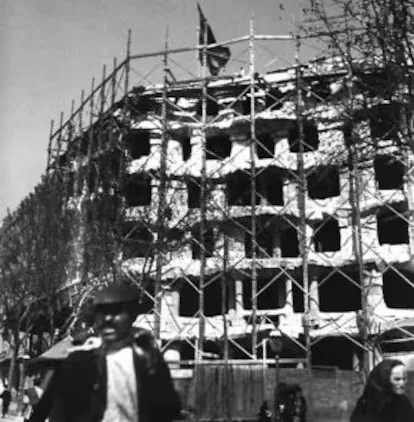
Commissioned by the Milà family in the first decade of the 20th century, Casa Milà — soon nicknamed La Pedrera (‘the stone quarry’) — was Gaudí’s radical answer to urban apartment living. Instead of rigid floors stacked like drawers, he conceived a living organism: fluid stone that wraps around two generous courtyards, with a steel and stone skeleton that frees interiors from load‑bearing walls. The aim wasn’t spectacle for its own sake, but a humane architecture tuned to light, air, and comfort.
Gaudí approached the building like a landscape artist. He worked with models, gravity chains, and catenary arches to refine forms that were both efficient and poetic. Tenants would enjoy cross‑ventilation, flexible layouts, and daylight poured down into homes from above. Over time, controversies about the unconventional façade and height gave way to quiet admiration. La Pedrera settled into the city as a place where everyday life and invention coexisted, while artisans carried Gaudí’s ideas into wrought iron, wood, plaster, and tile.
Design language and geometry
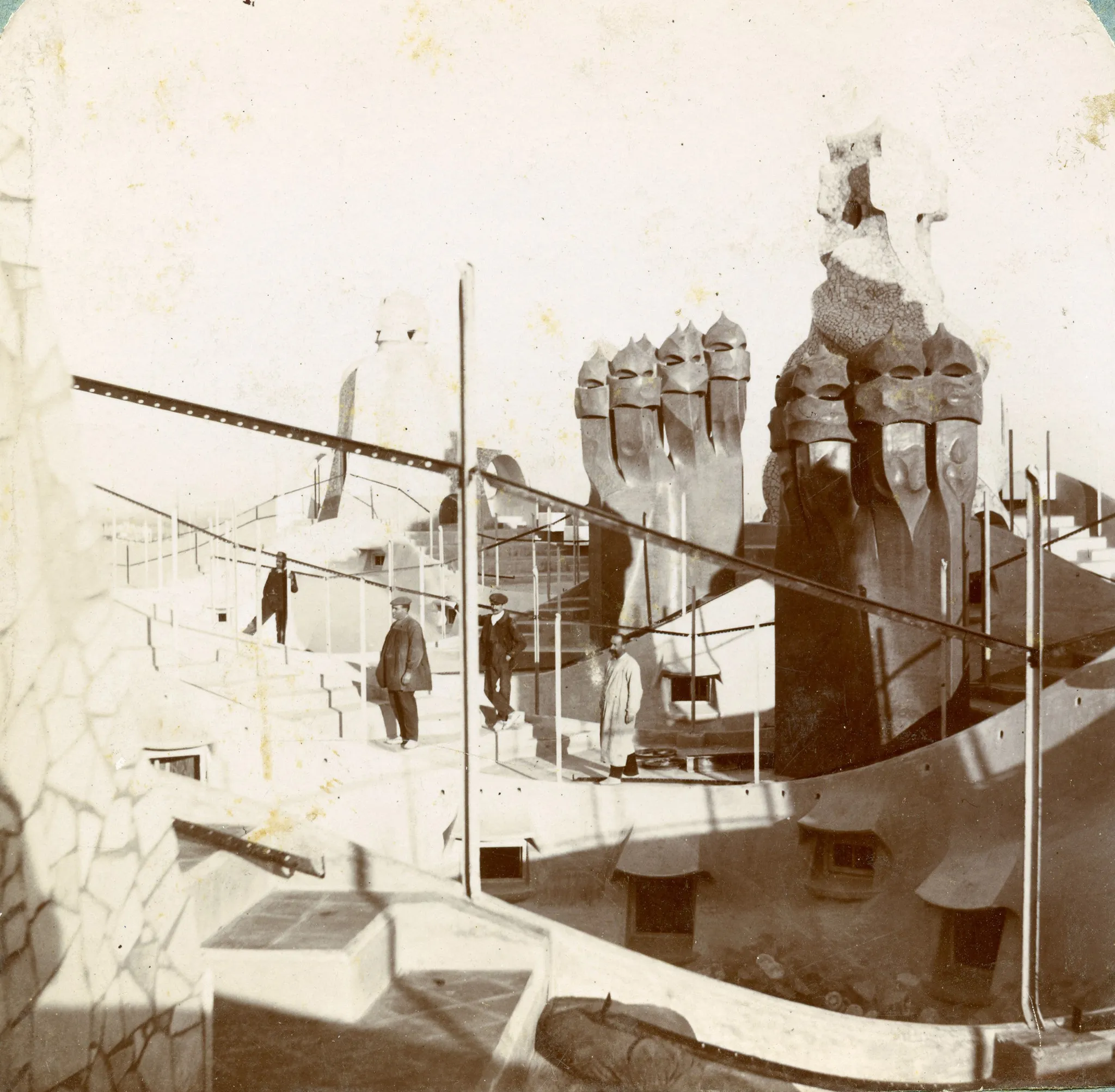
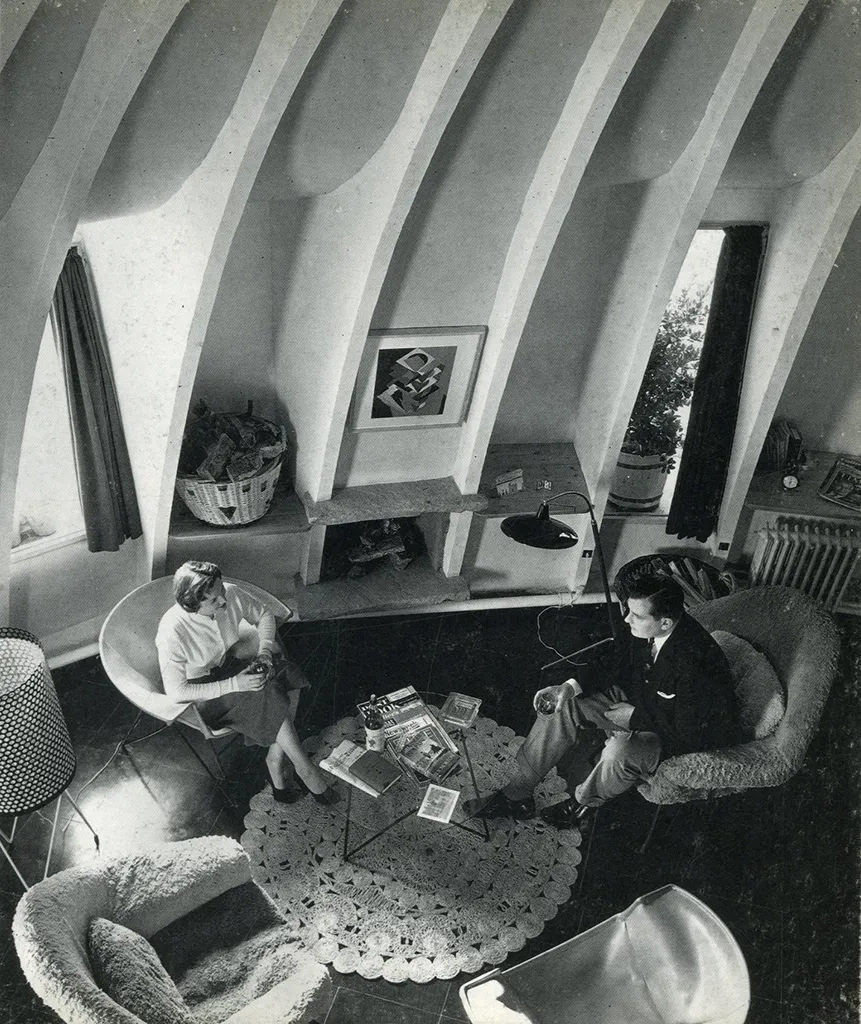
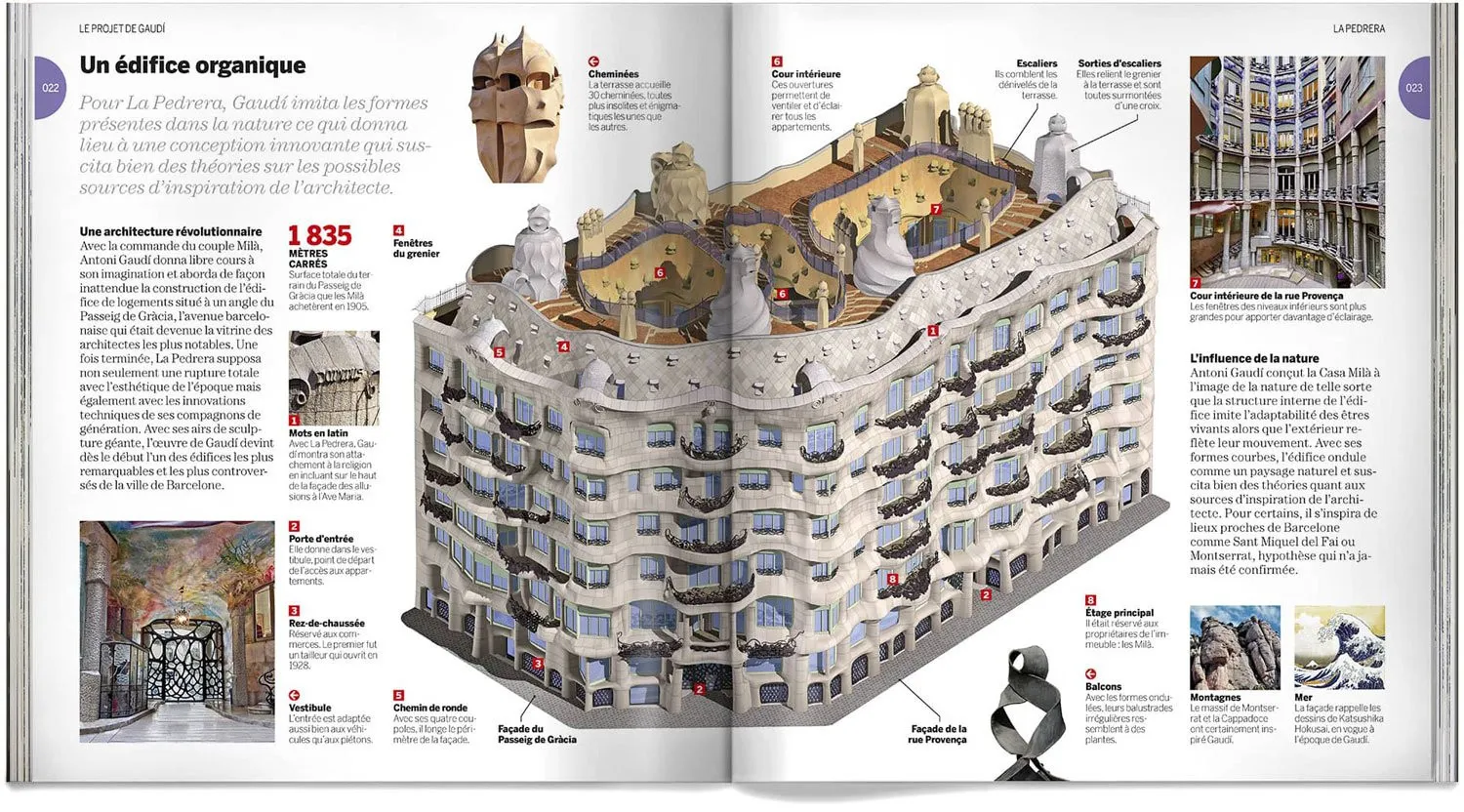
Gaudí’s geometry here is domestic but daring. Catenary arches shape the attic like a rhythmic ribcage; curved beams and an iron framework distribute loads so interior walls can move as life demands. Ruled surfaces and careful curvature make the façade read as a continuous wave — not decoration pasted on, but structure and skin fused together. The balconies unfurl in wrought iron like seaweed, each one a unique composition forged by artisan hands.
Light is the quiet protagonist. Courtyards act as lungs, drawing sun and sky into homes. Openings vary by floor and orientation, so rooms glow differently through the day, and color arrives in subtle tiles and finishes rather than stained glass. The building’s section is an instrument, tuned to bring gentle breezes, healthy ventilation, and a calm acoustic to the bustle of Passeig de Gràcia.
Façade, courtyards, and ironwork
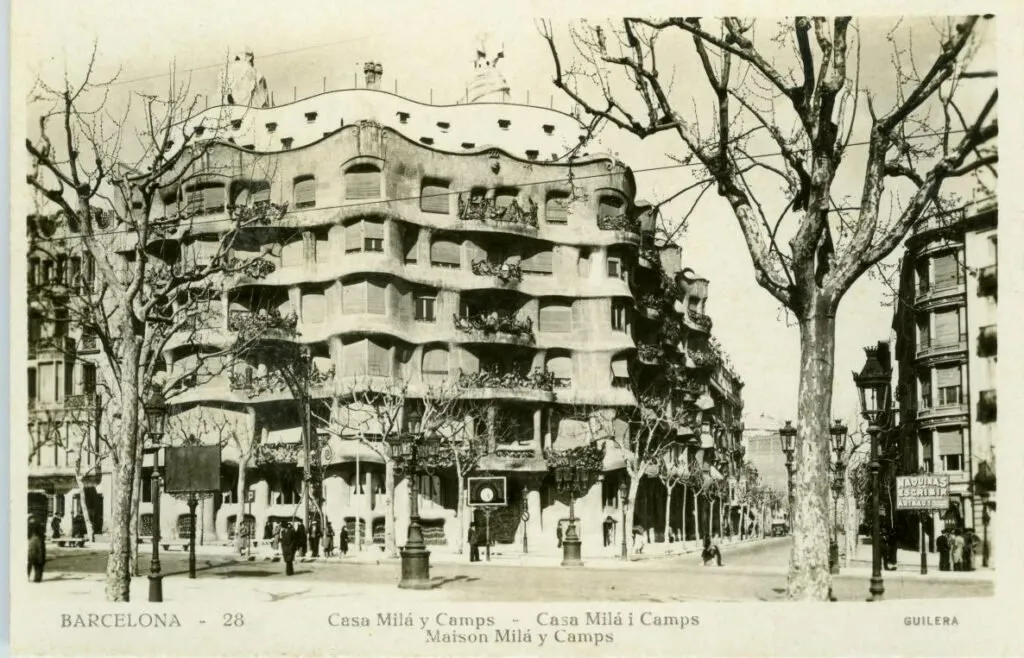
La Pedrera’s façade doesn’t tell a biblical story; it tells the story of movement and life. Stone ripples in soft waves; balconies bloom in wrought iron patterns that feel marine and vegetal. The corner opens like a mouth to the street, and the ground level merges architecture with city — a generous threshold from urban promenade to private world.
Inside, courtyards act as calm wells of daylight with painted walls and varying apertures that guide the eye upward. Ironwork is not merely protective but expressive: gates, railings, and handles carry the hand of the artisan, making daily touch part of the aesthetic experience. Even the ‘service’ parts of the building show care, knitting infrastructure and beauty together.
Interiors: apartment, attic, and light
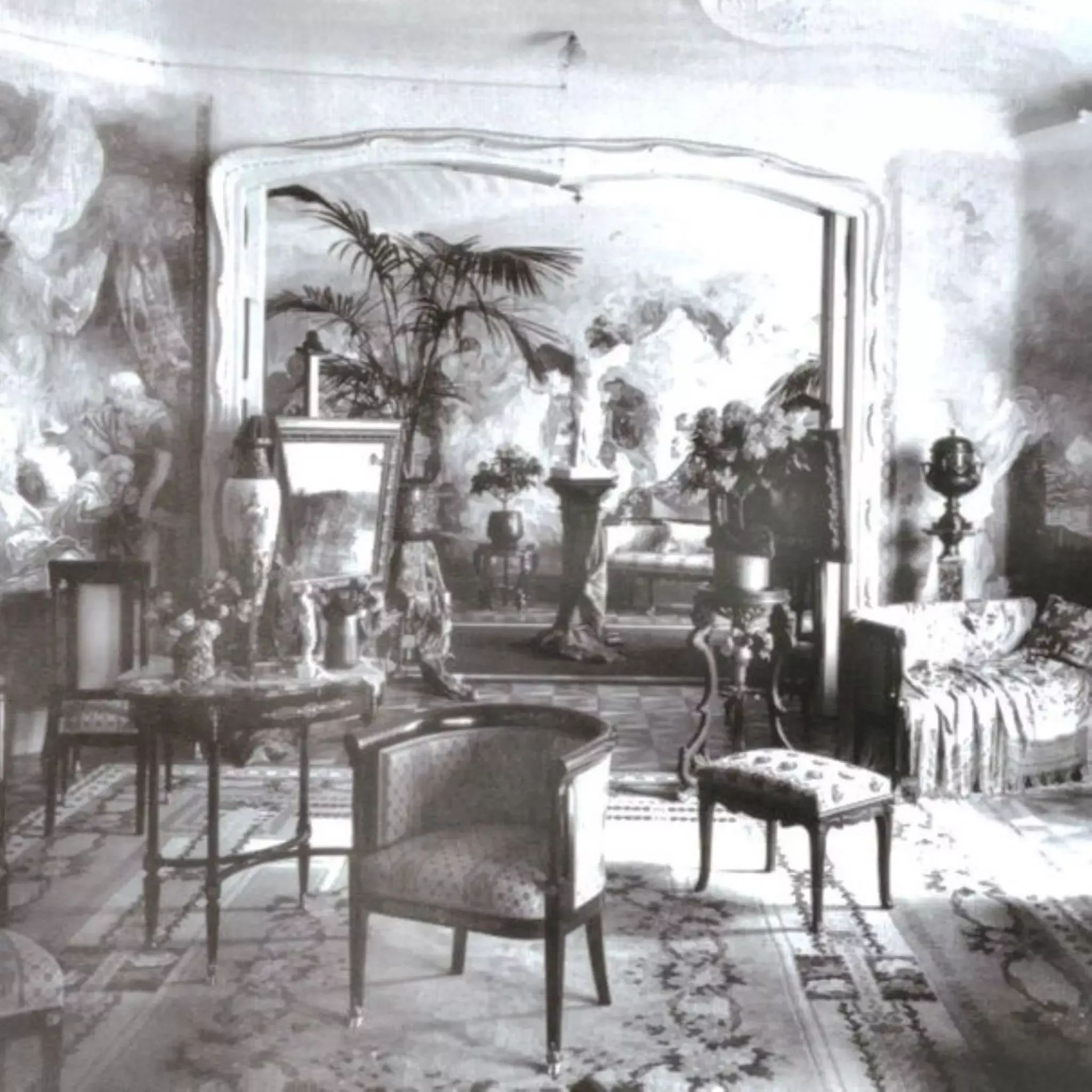
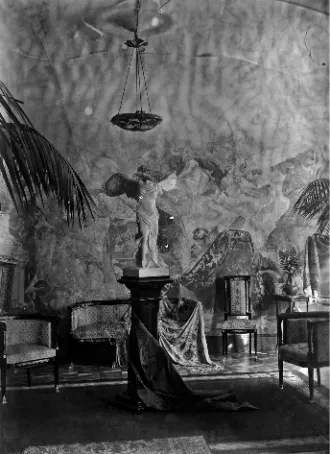
The recreated apartment returns you to early 20th‑century Barcelona: parquet floors, curved walls that soften corners, and furniture placed to catch daylight. It shows how Gaudí’s structure enabled flexibility — families could adapt spaces, partition or link rooms, and always keep fresh air moving.
Above, the attic feels both utilitarian and poetic. Catenary arches frame exhibits about construction and Gaudí’s methods; the rhythm of the arches makes walking a quiet, meditative experience. Light filters in from small windows, tracing soft arcs on plaster so the architecture itself becomes the museum display.
Rooftop, structure, and views
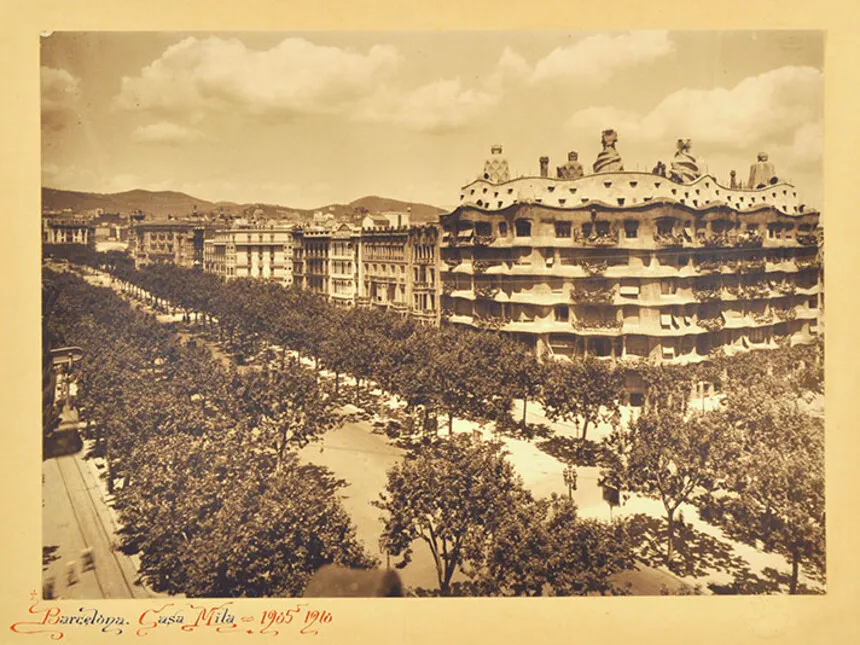
The rooftop is La Pedrera’s dreamscape: ventilation towers and chimneys stand like sentinels, clad in broken tile, stone, or plaster that turns utility into sculpture. Openings and stairs weave through the surface, and parapets draw curves against the sky. It’s a working roof made magical, an everyday necessity transformed into a place of wonder.
From here, Barcelona unfolds — the grid of Eixample, Tibidabo rising to the northwest, and the line of Passeig de Gràcia running like a parade of façades. In wind or rain, access may pause for safety, but on a calm day the city feels close enough to touch.
The Gaudí Room (museum)
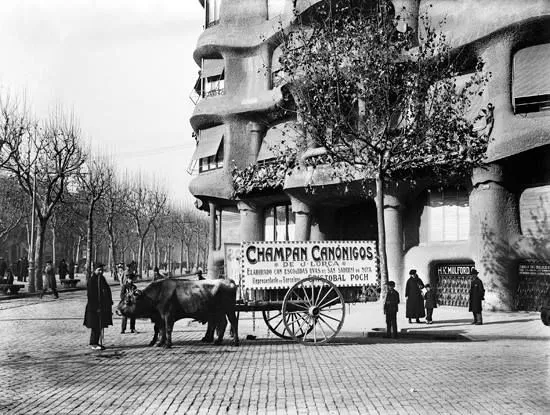
Exhibits reveal the working methods behind the living house: gravity chains, plaster models, and full‑scale templates that guided artisans. You’ll see how traditional craft and modern calculation worked together, turning experiments into rooms you can inhabit.
The museum pieces feel close to daily life — railings touched for a century, doors opened and closed, tiles placed by hand. La Pedrera shows that innovation isn’t abstract; it happens in kitchens, stairwells, courtyards, and rooftops as people live and move.
Construction timeline and techniques
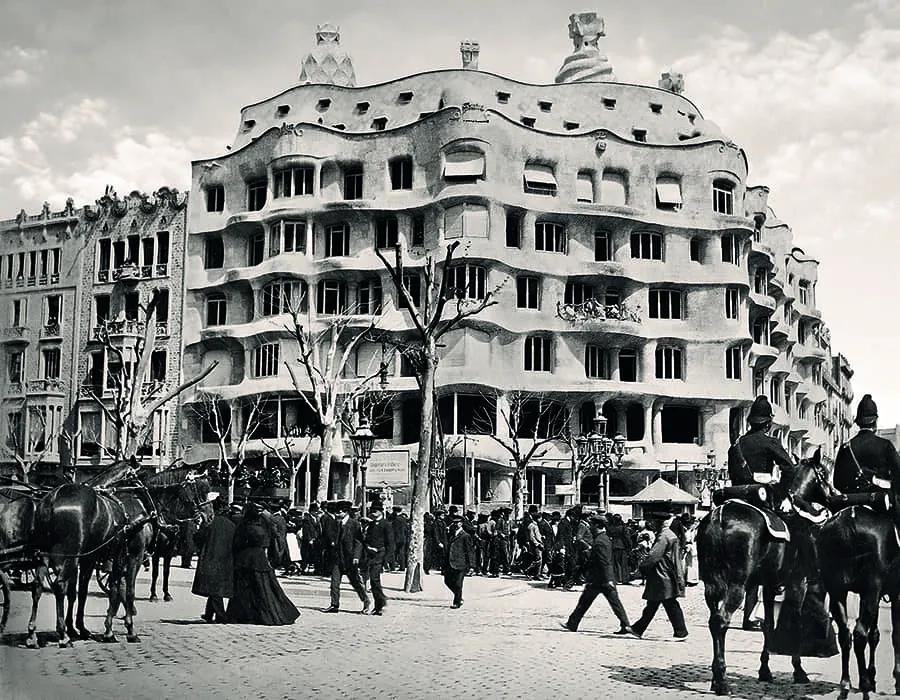
Built in the early 1900s, La Pedrera combined stone masonry with iron framing to liberate interior layouts. Artisans forged balconies and gates while stone carvers shaped the undulating skin; builders used models and templates to translate curves into precise blocks.
Over the century, the house saw changes, restorations, and a growing appreciation for its holistic design. Conservation today respects materials and original intentions, tuning the building for contemporary public use while guarding its character and warmth.
Life in the house: tenants and services
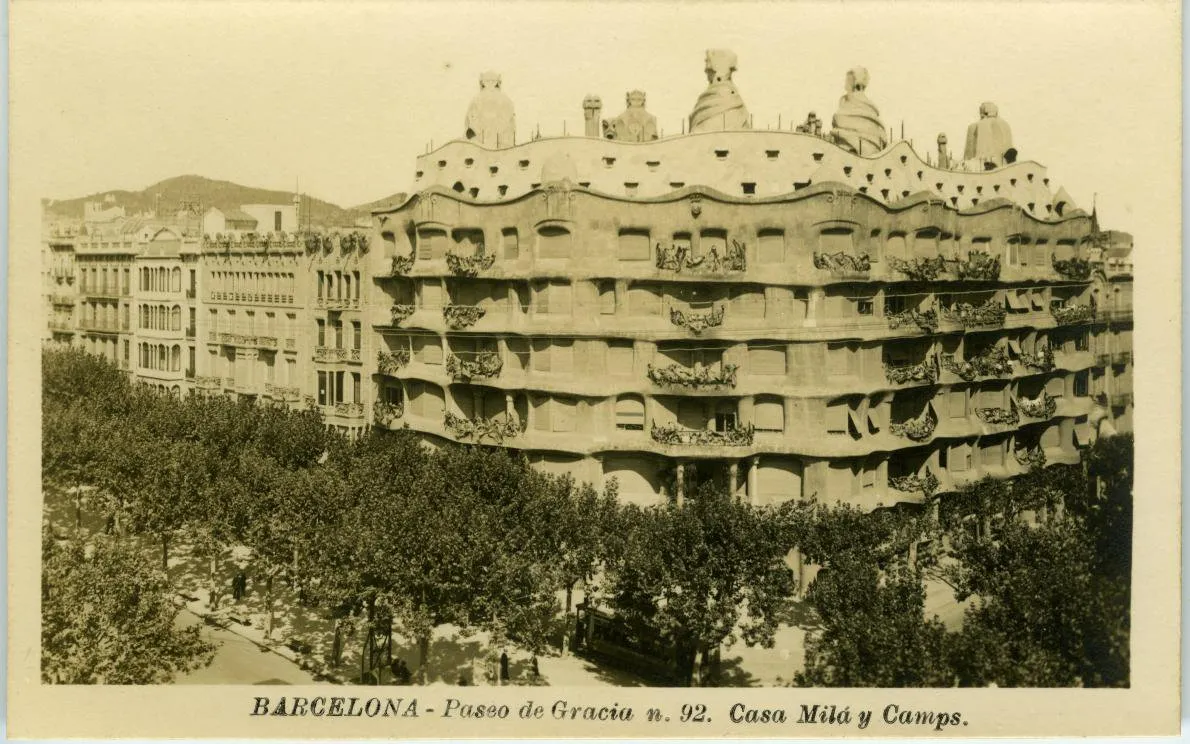
La Pedrera was built for living, not spectacle. Its courtyards brought air and light to tenants; service areas were thoughtfully arranged; deliveries, laundry, and daily routines were woven into the architecture. Stories from residents reveal a building that cared for comfort and dignity.
Music, conversation, and the rhythms of domestic life formed the soundscape. Over time, the house became both home and emblem, showing how modernisme could be intimate and practical — a humane art for everyday life.
UNESCO status and legacy
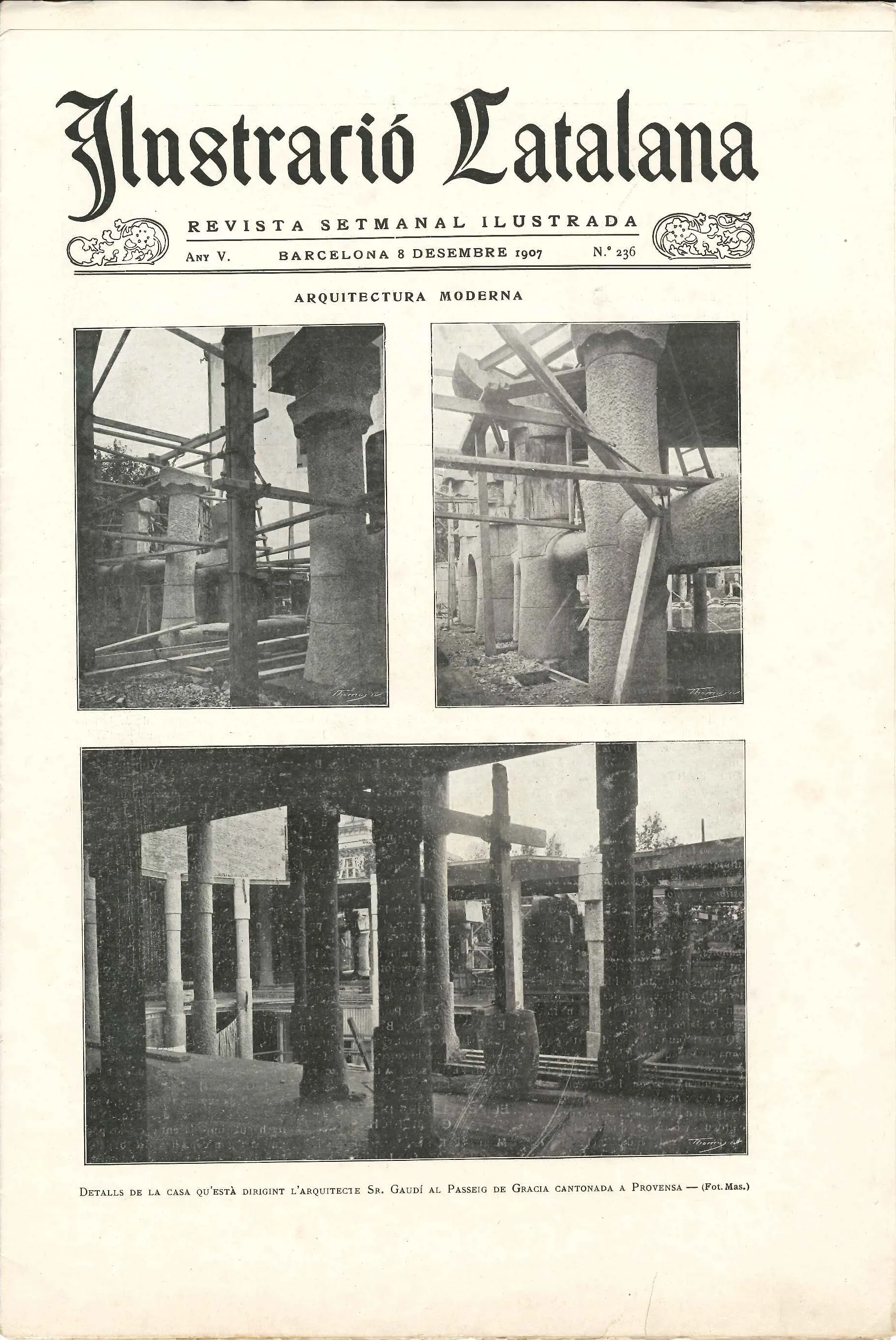
La Pedrera is inscribed within the ‘Works of Antoni Gaudí’ UNESCO World Heritage, recognizing its inventive structure, integration of craft and engineering, and influence on housing design.
Its legacy is tactile and social as much as visual: it nurtures crafts, welcomes visitors into everyday spaces, and shows how structure and beauty can serve real lives. Architects, designers, and curious travelers continue to learn from its generosity and intelligence.
Tickets, visits, and evening experiences
Entry options range from self‑guided visits with audio to morning small‑group tours and the Night Experience with projections on the rooftop. Evening slots are capacity‑controlled and can sell out days in advance in peak season.
Booking online secures your preferred time and lets you review flexibility, refund policies, and weather contingencies in advance — essential if you plan to include the rooftop at dusk.
Accessibility and safety
La Pedrera provides accessible routes, adapted facilities, and staff guidance; some areas include stairs or uneven surfaces, so allow extra time and ask for help if needed.
Rooftop visits involve staircases and parapets; they may be unsuitable for certain mobility or vertigo conditions. Prams are not recommended on the rooftop. Always follow on‑site instructions.
Neighborhood and nearby sights
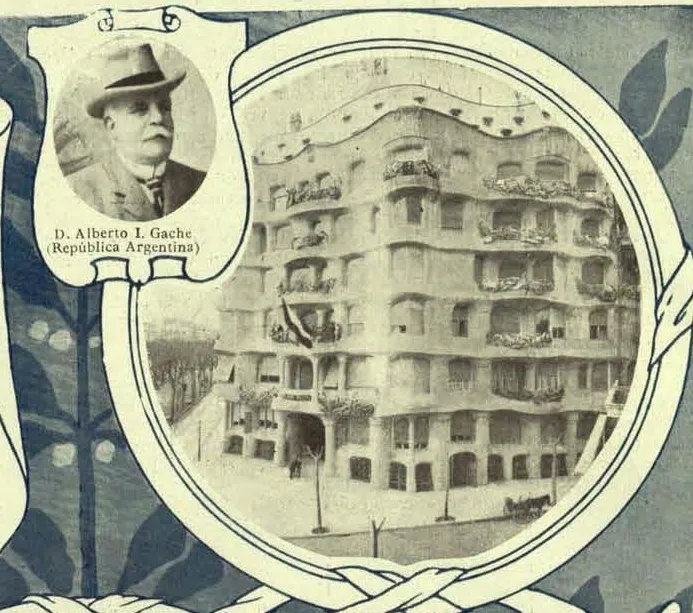
Stroll down Passeig de Gràcia for Casa Batlló, elegant shops, and cafés under plane trees. The Eixample grid invites relaxed, architectural walks with wide sidewalks and patterned tiles.
Nearby, discover small bakeries on Provença and Rosselló, or continue toward Gràcia’s lively squares. Morning and late afternoon are perfect for photos with gentle light on the stone.
Why La Pedrera matters
Few places integrate structure, craft, comfort, and city life as gracefully as La Pedrera. It proves that innovation can be humane — that engineering and poetry can serve families, hospitality, and the daily ritual of opening a window to the sky.
Your ticket supports conservation and storytelling. It keeps artisans, guides, and caretakers at work, preserving a living house where curiosity and care are welcome and where Gaudí’s ideas continue to meet everyday needs.
Table of Contents
Origins and Gaudí’s vision
Commissioned by the Milà family in the first decade of the 20th century, Casa Milà — soon nicknamed La Pedrera (‘the stone quarry’) — was Gaudí’s radical answer to urban apartment living. Instead of rigid floors stacked like drawers, he conceived a living organism: fluid stone that wraps around two generous courtyards, with a steel and stone skeleton that frees interiors from load‑bearing walls. The aim wasn’t spectacle for its own sake, but a humane architecture tuned to light, air, and comfort.
Gaudí approached the building like a landscape artist. He worked with models, gravity chains, and catenary arches to refine forms that were both efficient and poetic. Tenants would enjoy cross‑ventilation, flexible layouts, and daylight poured down into homes from above. Over time, controversies about the unconventional façade and height gave way to quiet admiration. La Pedrera settled into the city as a place where everyday life and invention coexisted, while artisans carried Gaudí’s ideas into wrought iron, wood, plaster, and tile.
Design language and geometry
Gaudí’s geometry here is domestic but daring. Catenary arches shape the attic like a rhythmic ribcage; curved beams and an iron framework distribute loads so interior walls can move as life demands. Ruled surfaces and careful curvature make the façade read as a continuous wave — not decoration pasted on, but structure and skin fused together. The balconies unfurl in wrought iron like seaweed, each one a unique composition forged by artisan hands.
Light is the quiet protagonist. Courtyards act as lungs, drawing sun and sky into homes. Openings vary by floor and orientation, so rooms glow differently through the day, and color arrives in subtle tiles and finishes rather than stained glass. The building’s section is an instrument, tuned to bring gentle breezes, healthy ventilation, and a calm acoustic to the bustle of Passeig de Gràcia.
Façade, courtyards, and ironwork
La Pedrera’s façade doesn’t tell a biblical story; it tells the story of movement and life. Stone ripples in soft waves; balconies bloom in wrought iron patterns that feel marine and vegetal. The corner opens like a mouth to the street, and the ground level merges architecture with city — a generous threshold from urban promenade to private world.
Inside, courtyards act as calm wells of daylight with painted walls and varying apertures that guide the eye upward. Ironwork is not merely protective but expressive: gates, railings, and handles carry the hand of the artisan, making daily touch part of the aesthetic experience. Even the ‘service’ parts of the building show care, knitting infrastructure and beauty together.
Interiors: apartment, attic, and light
The recreated apartment returns you to early 20th‑century Barcelona: parquet floors, curved walls that soften corners, and furniture placed to catch daylight. It shows how Gaudí’s structure enabled flexibility — families could adapt spaces, partition or link rooms, and always keep fresh air moving.
Above, the attic feels both utilitarian and poetic. Catenary arches frame exhibits about construction and Gaudí’s methods; the rhythm of the arches makes walking a quiet, meditative experience. Light filters in from small windows, tracing soft arcs on plaster so the architecture itself becomes the museum display.
Rooftop, structure, and views
The rooftop is La Pedrera’s dreamscape: ventilation towers and chimneys stand like sentinels, clad in broken tile, stone, or plaster that turns utility into sculpture. Openings and stairs weave through the surface, and parapets draw curves against the sky. It’s a working roof made magical, an everyday necessity transformed into a place of wonder.
From here, Barcelona unfolds — the grid of Eixample, Tibidabo rising to the northwest, and the line of Passeig de Gràcia running like a parade of façades. In wind or rain, access may pause for safety, but on a calm day the city feels close enough to touch.
The Gaudí Room (museum)
Exhibits reveal the working methods behind the living house: gravity chains, plaster models, and full‑scale templates that guided artisans. You’ll see how traditional craft and modern calculation worked together, turning experiments into rooms you can inhabit.
The museum pieces feel close to daily life — railings touched for a century, doors opened and closed, tiles placed by hand. La Pedrera shows that innovation isn’t abstract; it happens in kitchens, stairwells, courtyards, and rooftops as people live and move.
Construction timeline and techniques
Built in the early 1900s, La Pedrera combined stone masonry with iron framing to liberate interior layouts. Artisans forged balconies and gates while stone carvers shaped the undulating skin; builders used models and templates to translate curves into precise blocks.
Over the century, the house saw changes, restorations, and a growing appreciation for its holistic design. Conservation today respects materials and original intentions, tuning the building for contemporary public use while guarding its character and warmth.
Life in the house: tenants and services
La Pedrera was built for living, not spectacle. Its courtyards brought air and light to tenants; service areas were thoughtfully arranged; deliveries, laundry, and daily routines were woven into the architecture. Stories from residents reveal a building that cared for comfort and dignity.
Music, conversation, and the rhythms of domestic life formed the soundscape. Over time, the house became both home and emblem, showing how modernisme could be intimate and practical — a humane art for everyday life.
UNESCO status and legacy
La Pedrera is inscribed within the ‘Works of Antoni Gaudí’ UNESCO World Heritage, recognizing its inventive structure, integration of craft and engineering, and influence on housing design.
Its legacy is tactile and social as much as visual: it nurtures crafts, welcomes visitors into everyday spaces, and shows how structure and beauty can serve real lives. Architects, designers, and curious travelers continue to learn from its generosity and intelligence.
Tickets, visits, and evening experiences
Entry options range from self‑guided visits with audio to morning small‑group tours and the Night Experience with projections on the rooftop. Evening slots are capacity‑controlled and can sell out days in advance in peak season.
Booking online secures your preferred time and lets you review flexibility, refund policies, and weather contingencies in advance — essential if you plan to include the rooftop at dusk.
Accessibility and safety
La Pedrera provides accessible routes, adapted facilities, and staff guidance; some areas include stairs or uneven surfaces, so allow extra time and ask for help if needed.
Rooftop visits involve staircases and parapets; they may be unsuitable for certain mobility or vertigo conditions. Prams are not recommended on the rooftop. Always follow on‑site instructions.
Neighborhood and nearby sights
Stroll down Passeig de Gràcia for Casa Batlló, elegant shops, and cafés under plane trees. The Eixample grid invites relaxed, architectural walks with wide sidewalks and patterned tiles.
Nearby, discover small bakeries on Provença and Rosselló, or continue toward Gràcia’s lively squares. Morning and late afternoon are perfect for photos with gentle light on the stone.
Why La Pedrera matters
Few places integrate structure, craft, comfort, and city life as gracefully as La Pedrera. It proves that innovation can be humane — that engineering and poetry can serve families, hospitality, and the daily ritual of opening a window to the sky.
Your ticket supports conservation and storytelling. It keeps artisans, guides, and caretakers at work, preserving a living house where curiosity and care are welcome and where Gaudí’s ideas continue to meet everyday needs.